About
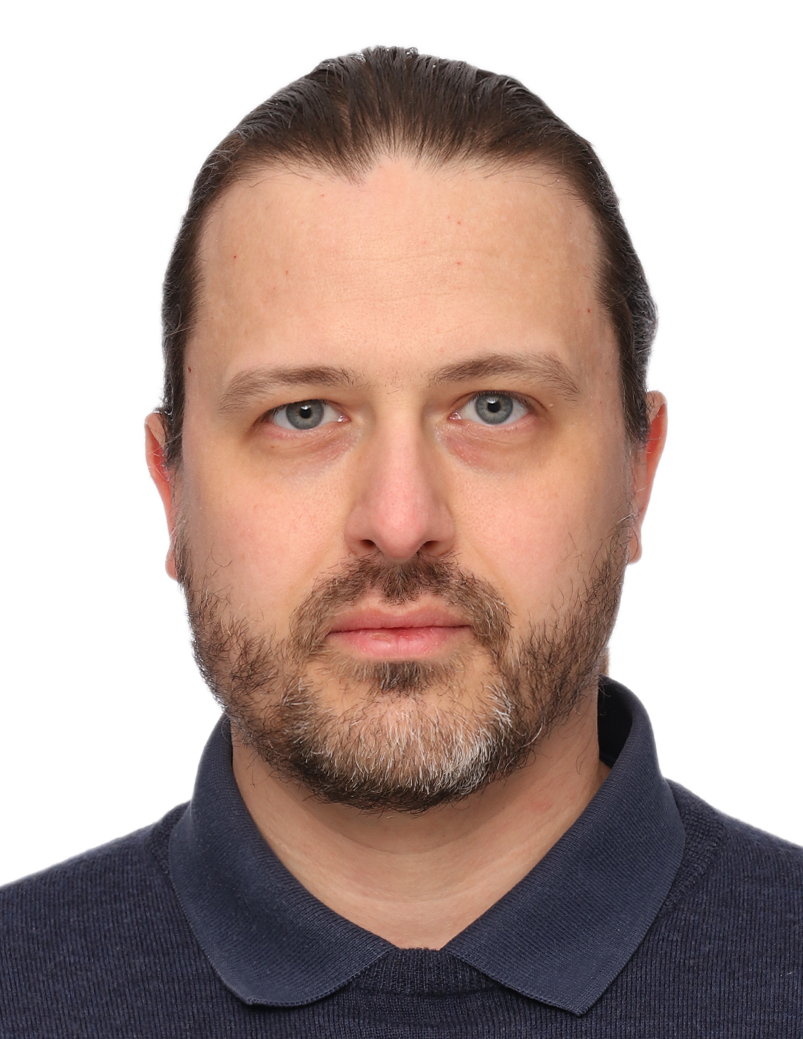
Boris Houska is a Professor at ShanghaiTech University. He received a Diploma in Mathematics from the University of Heidelberg in 2007 and a Ph.D. in Electrical Engineering from KU Leuven in 2011. From 2012 to 2013, he was a Postdoctoral Researcher at the Centre for Process Systems Engineering at Imperial College London. He subsequently held a Researcher position at Shanghai Jiao Tong University in 2013, followed by Visiting Professor appointments at the Freiburg Institute for Advanced Studies and at the Institute for Microsystems Engineering at the University of Freiburg (both in 2014). He has also held several shorter visiting appointments, including at the University of California, Berkeley (Winter 2017) and Imperial College London (Summer 2018). In 2024, he was Visiting Professor at the IMT School for Advanced Studies Lucca.
Research
Selected topics and publications:
Operator-Theoretic Control
Nonlinear dynamics can be represented via linear evolution in infinite-dimensional function spaces using Koopman and Fokker–Planck operators. This enables the use of low-rank linear algebra and convex optimization tools for nonlinear system identification and control design.
📄 Towards global optimal control via Koopman lifts
🎥 Recorded presentation
Set-Theoretic Control
Set-theoretic methods provide a geometric framework for representing uncertainty, constraints, and invariance in control systems. The main challenge is to obtain set representations that remain tractable in high dimensions while preserving structure required for control Lyapunov function and robust control design.
📄 Intrinsic separation principles
📄 Configuration-constrained tube MPC
📄 Control Lyapunov function design via configuration-constrained polyhedral computing
Distributed Optimization and Control
Distributed optimization decomposes large-scale control problems into smaller subproblems that can be solved in parallel across interconnected systems. Augmented Lagrangian methods such as ALADIN enable fast and reliable coordination for non-convex and structured optimization problems arising in control.
📄 Distributed optimization and control with ALADIN
📄 Towards distributed OPF using ALADIN
🎥 Recorded presentation
Global Optimization and Control
Global optimization methods provide guarantees of optimality for nonlinear control problems with non-convex dynamics and constraints. Functional-analytic and relaxation-based approaches enable tractable formulations of otherwise intractable optimal control problems.
📄 Branch-and-lift algorithm for deterministic global optimization in nonlinear optimal control
Robust Optimization and Control
Robust optimization accounts for uncertainty in dynamical systems by enforcing performance and constraint satisfaction under worst-case realizations. Convex and bilevel formulations enable tractable approximations of nonlinear robust optimal control problems.
📄 Nonlinear robust optimization via sequential convex bilevel programming
Optimal Control Software
Efficient numerical methods are essential for solving optimal control problems in real time. Structure-exploiting algorithms and code generation techniques enable fast implementations for embedded and large-scale systems.
📄 An auto-generated real-time iteration algorithm for nonlinear MPC in the microsecond range
💻 ACADO Toolkit (software)
Teaching
Recent courses in applied mathematics:
- Linear Algebra — Lecture Notes
- Mathematical Modeling — Lecture Notes
- Numerical Analysis — Lecture Notes